

Head Injury Emergency: Know the Warning Signs That Need the ER
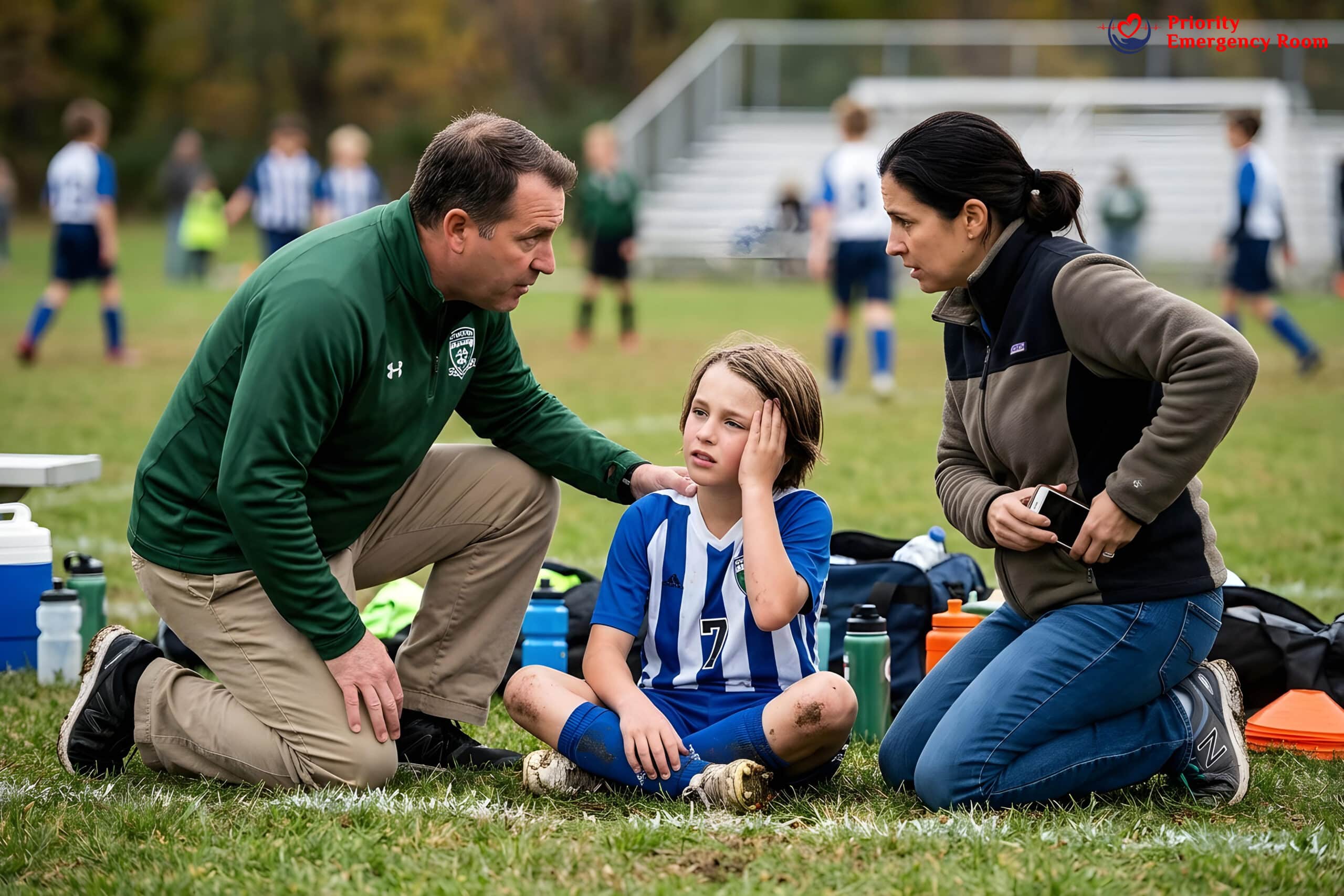
A head injury just happened—a fall, an accident, a collision. Now you’re trying to figure out: is this a head injury emergency that needs the ER, or something that will be fine with rest? The brain is hidden inside the skull, so you can’t see what’s happening. How do you know if it’s serious?
Stop. Head injuries are different from other injuries. Some that seem minor can cause brain bleeds, while others that seem scary turn out to be fine. Here’s exactly how to know if a head injury is an emergency.
Here’s when a head injury is an emergency: Go to the ER if there was any loss of consciousness, if vomiting occurs, if headache gets worse over time, if there’s confusion or memory loss, if pupils are unequal, or if there’s clear fluid from the nose or ears. Brain bleeds can develop hours after injury. When in doubt about a head injury, get a CT scan.
Watch at Home vs. ER: Making the Right Call
The brain is protected by the skull, but that also means you can’t see what’s happening inside. A person can look fine and have bleeding developing. That’s why knowing the warning signs is critical.
Here’s how to assess whether a head injury is an emergency:
H — How It Happened: What was the mechanism of injury? Higher risk: falls from height, car accidents, high-speed sports collision, being struck by an object, assault.
E — Effect on Consciousness: Was consciousness affected? Emergency signs: any loss of consciousness, being dazed or “out of it,” can’t remember the injury.
A — Alarming Symptoms: What symptoms are present? Emergency signs: vomiting, severe or worsening headache, confusion, unequal pupils, clear fluid from nose/ears.
D — Deterioration: Are things getting worse? Emergency signs: symptoms worsening over hours, increasing drowsiness, personality changes, new neurological symptoms.
If you have any emergency signs, go to the ER. A CT scan can show bleeding or swelling that isn’t visible from the outside.
Brain bleeds (subdural and epidural hematomas) can develop slowly. Someone can seem fine right after a head injury, then deteriorate hours later. This is why monitoring for 24-48 hours is critical—and why any new or worsening symptoms during this time should prompt immediate ER evaluation.
When a Head Injury Can Be Monitored at Home
Not every bump on the head requires the ER. Some minor head injuries can be safely monitored at home. Here’s when home observation may be appropriate.
Head Injuries That May Not Need Immediate ER
No loss of consciousness • No vomiting • No neurological symptoms • Alert and oriented
The key phrase is close monitoring. Even minor head injuries should be watched for 24-48 hours. If anything changes or worsens during this time, go to the ER immediately.
Head Injury Emergency Warning Signs
These symptoms after a head injury require immediate ER evaluation. Don’t wait. Our head trauma and concussion emergency team says these are head injury emergencies:
Emergency
Loss of Consciousness
Any blackout or being “knocked out”—even for a few seconds—indicates significant brain impact and requires CT scan evaluation.
Emergency
Vomiting
Vomiting after head injury—especially repeated vomiting or vomiting that starts hours later—indicates increased brain pressure.
Emergency
Worsening Headache
Headache that keeps getting worse—not better—over time may indicate bleeding or swelling in the brain.

Emergency
Confusion or Memory Loss
Can’t remember the injury, asking the same questions repeatedly, or seeming disoriented indicates brain dysfunction.
High-Risk Groups: Lower Threshold for ER
Always go to the ER for any significant head injury if: the person takes blood thinners (warfarin, Eliquis, etc.), is over 65 years old, has a history of brain surgery or bleeding disorders, or if the mechanism involved significant force.
Built for Head Injury Emergencies
When a head injury might be serious, you need fast evaluation. Here’s what makes Priority ER different:
The Difference at 2 AM
Hospital ER
3+ hours
Average wait in Texas
Priority ER
Minutes
Straight to a room
CT Scanner
On-site, results in minutes
Neuro Exam
Expert evaluation
Real ER
Board-certified ER physicians
Same capabilities as a hospital ER.
Without the chaos.
What to Expect When You Arrive
Here’s how a Priority ER head injury visit unfolds:
Your Priority ER Visit
From arrival to answers
0-2 minutes
2-5 minutes
5-15 minutes
15-30 minutes
30-60 minutes
Immediate Triage (0-2 min)
Head injuries are prioritized. You’re seen immediately.
Private Room (2-5 min)
Straight to a private, quiet treatment room.
Neurological Exam (5-15 min)
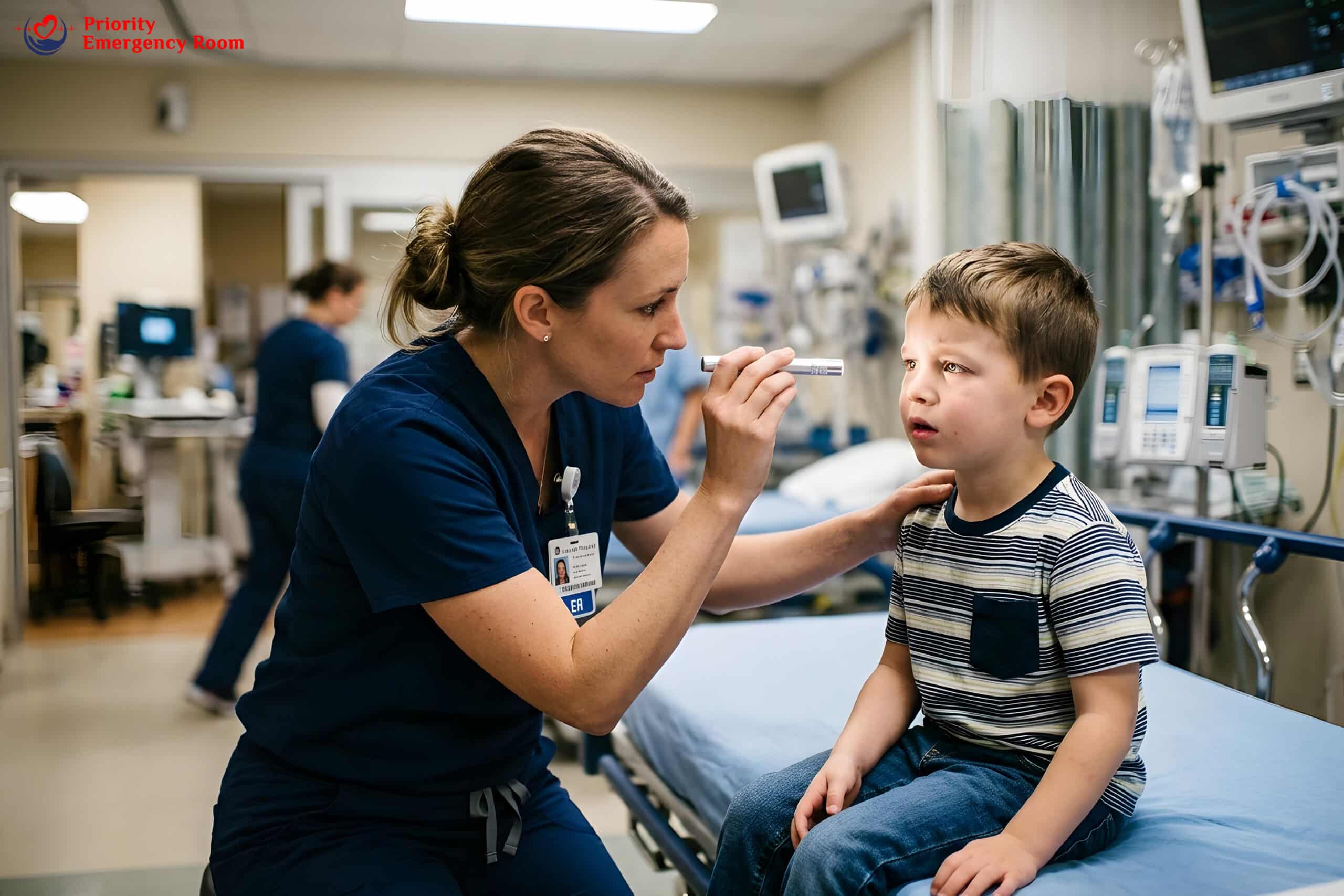
Physician performs thorough evaluation—pupils, strength, coordination, memory, balance.
CT Scan (15-30 min)
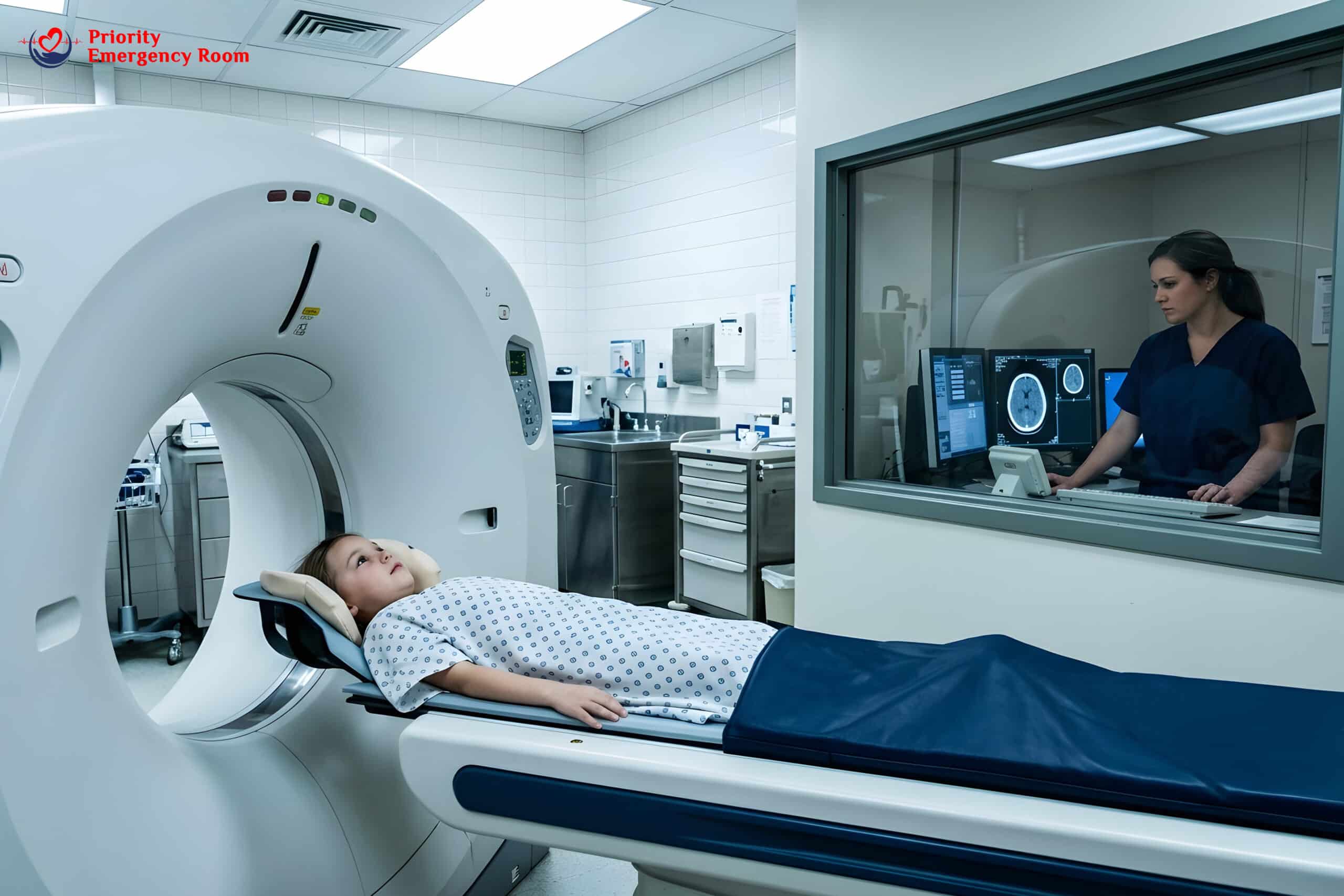
If indicated, CT of brain to check for bleeding, fracture, and swelling.
Results & Plan (30-60 min)
Results reviewed, diagnosis explained, treatment or monitoring instructions provided.
At Priority ER, you get fast answers about a head injury—not hours of anxious waiting. Find a 24-hour emergency room near you.²
When a Head Injury Might Be Serious
Board-certified emergency physicians. On-site CT scanner. Neurological evaluation. Zero wait time. Know if it’s serious—now.
Priority ER Locations
All locations have on-site CT scanners and board-certified emergency physicians ready to evaluate head injuries.
🌵 Odessa (West Texas)
3800 E 42nd St, Suite 105
Odessa, TX 79762
Serving Odessa, Midland, Gardendale, Greenwood & the Permian Basin
🏛 Round Rock (Austin Area)
1700 Round Rock Ave
Round Rock, TX 78681
Serving Round Rock, Cedar Park, Pflugerville, Georgetown & North Austin
⭐ McKinney (North Dallas)
5000 Eldorado Pkwy
McKinney, TX 75072
Serving McKinney, Frisco, Allen, Prosper & Collin County
🏙 Pantego (Arlington)
1607 S Bowen Rd
Pantego, TX 76013
Serving Arlington, Pantego, Grand Prairie & Mid-Cities DFW
🌊 Rockwall (East Dallas)
2265 N Lakeshore Dr #100
Rockwall, TX 75087
Serving Rockwall, Heath, Rowlett, Fate & Lake Ray Hubbard area
The Bottom Line: What Makes a Head Injury an Emergency?
A head injury is an emergency if there’s any loss of consciousness, vomiting, worsening headache, confusion, unequal pupils, clear fluid from nose or ears, seizure, or neurological changes. People on blood thinners or over 65 should be evaluated for any significant head injury.
Priority ER has on-site CT scanning to quickly determine if there’s bleeding or fracture—without the hours of waiting at a hospital ER. We also treat related conditions like hematomas and contusions, seizures, and fall-related traumatic injuries.
When a head injury might be serious, come get answers fast.
Medical References
- American College of Emergency Physicians. (2024). “Clinical Policy: Mild Traumatic Brain Injury.” ACEP. Retrieved from https://www.acep.org/
- Centers for Disease Control and Prevention. (2024). “Traumatic Brain Injury.” CDC. Retrieved from https://www.cdc.gov/traumaticbraininjury/
- American College of Radiology. (2024). “ACR Appropriateness Criteria: Head Trauma.” Retrieved from https://www.acr.org/
- Brain Trauma Foundation. (2024). “TBI Guidelines.” Retrieved from https://braintrauma.org/
- Priority ER Internal Data. (2024). “Head Injury Statistics.” Quality Assurance Report.
- Mayo Clinic. (2024). “Traumatic Brain Injury.” Retrieved from https://www.mayoclinic.org/
- American Academy of Neurology. (2024). “Concussion Guidelines.” Retrieved from https://www.aan.com/
- Healthcare Cost and Utilization Project. (2024). “ED Visits for Head Injuries.” Retrieved from https://hcup-us.ahrq.gov/
- Texas Department of State Health Services. (2024). “Emergency Department Statistics.” Retrieved from https://www.dshs.texas.gov/