

Bronchitis Emergency: When Your Cough Needs the ER
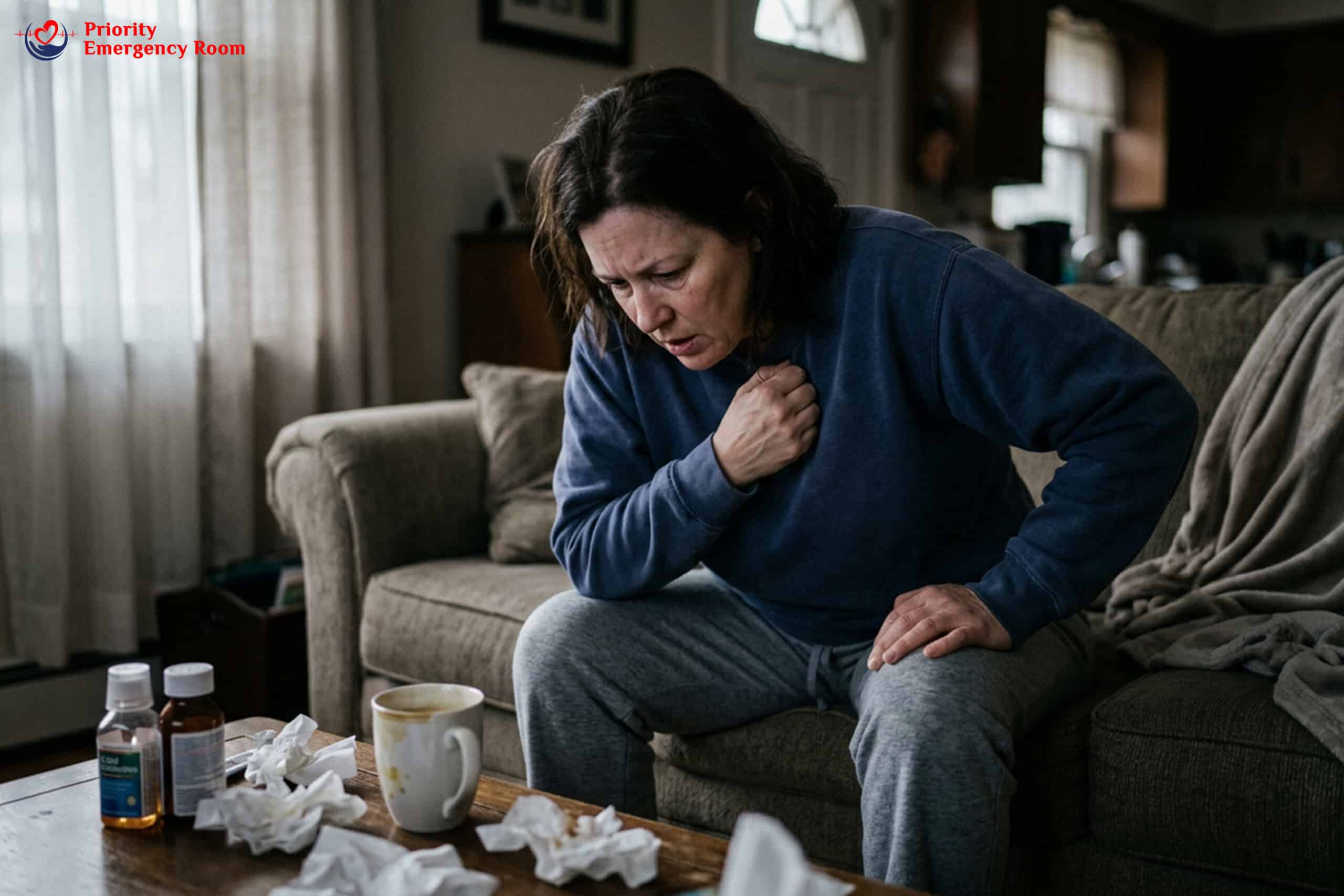
You’ve been coughing for days. Your chest feels heavy, breathing takes effort, and it’s getting worse instead of better. Is this bronchitis something you can ride out at home, or has it become an emergency that needs the ER?
Stop. Most bronchitis clears up on its own—but some cases develop into serious respiratory emergencies. Here’s how to know when bronchitis needs more than rest and fluids.
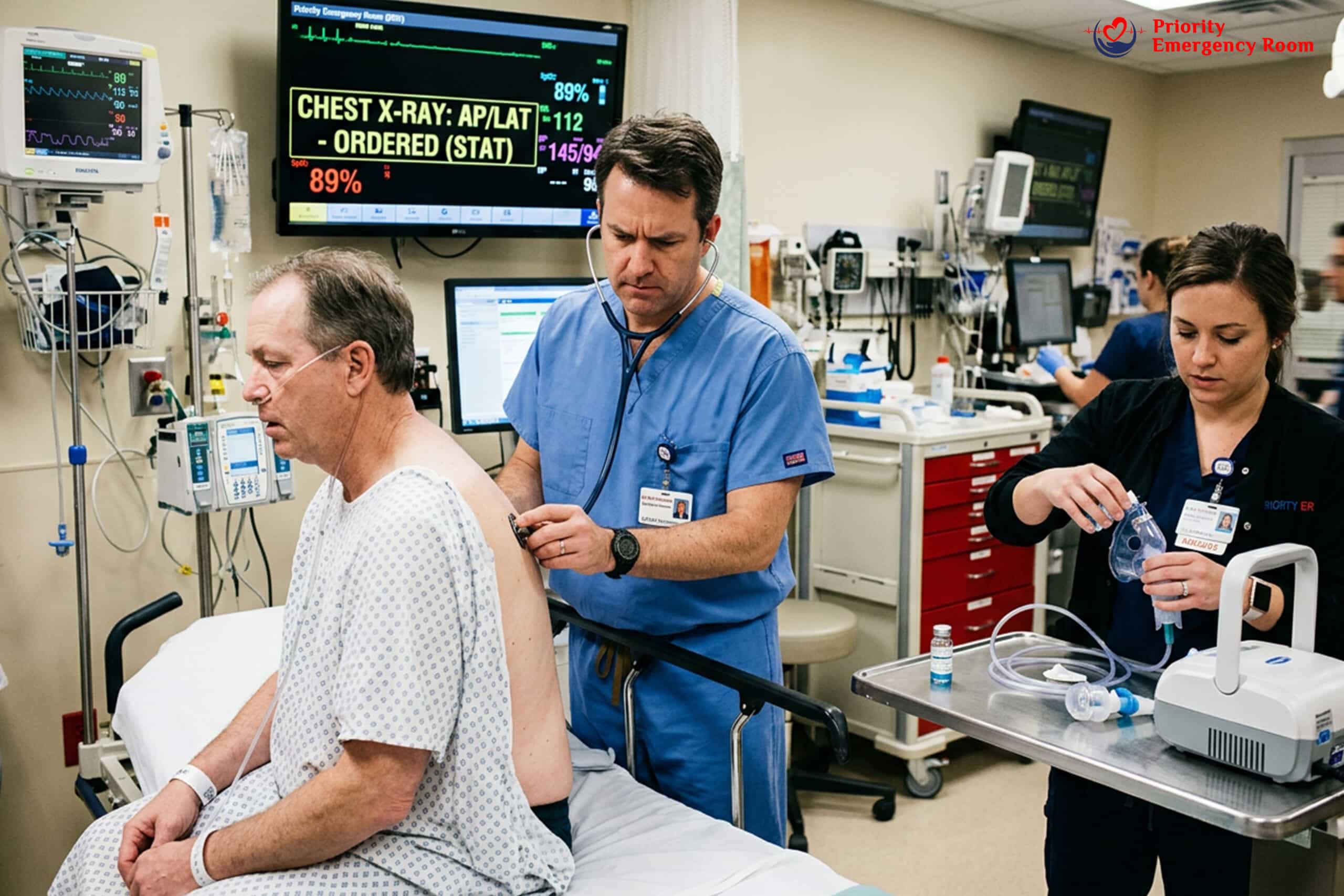
Here’s when bronchitis becomes an emergency: Go to the ER if you’re struggling to breathe, if your lips or nails are turning blue, if you have a fever over 103°F, if you’re coughing up blood, or if you have severe chest pain. These symptoms can indicate pneumonia or respiratory failure. The ER has chest X-rays, oxygen, and breathing treatments that can’t wait for a doctor’s appointment.
Home Care vs. ER: What’s the Difference?
Acute bronchitis is usually caused by viruses and resolves in 1-3 weeks. But sometimes bronchitis progresses to pneumonia or causes dangerous breathing problems—especially in people with underlying conditions. When symptoms get severe, you need respiratory distress emergency care.
Here’s how to assess whether your bronchitis needs the ER:
B — Breathing: How hard is it to breathe? Emergency signs: gasping, can’t catch your breath, using neck/chest muscles to breathe, can only speak a few words at a time.
R — Rate & Color: How fast are you breathing and what’s your color? Emergency signs: rapid shallow breathing, blue or gray lips/fingernails, pale or dusky skin.
E — Escalating Symptoms: Are things getting worse? Emergency signs: symptoms rapidly worsening over hours, fever spiking despite medication, increasing confusion or weakness.
A — Alarming Signs: Are there concerning symptoms? Emergency signs: coughing up blood, severe chest pain, high fever (103°F+), extreme fatigue or confusion.
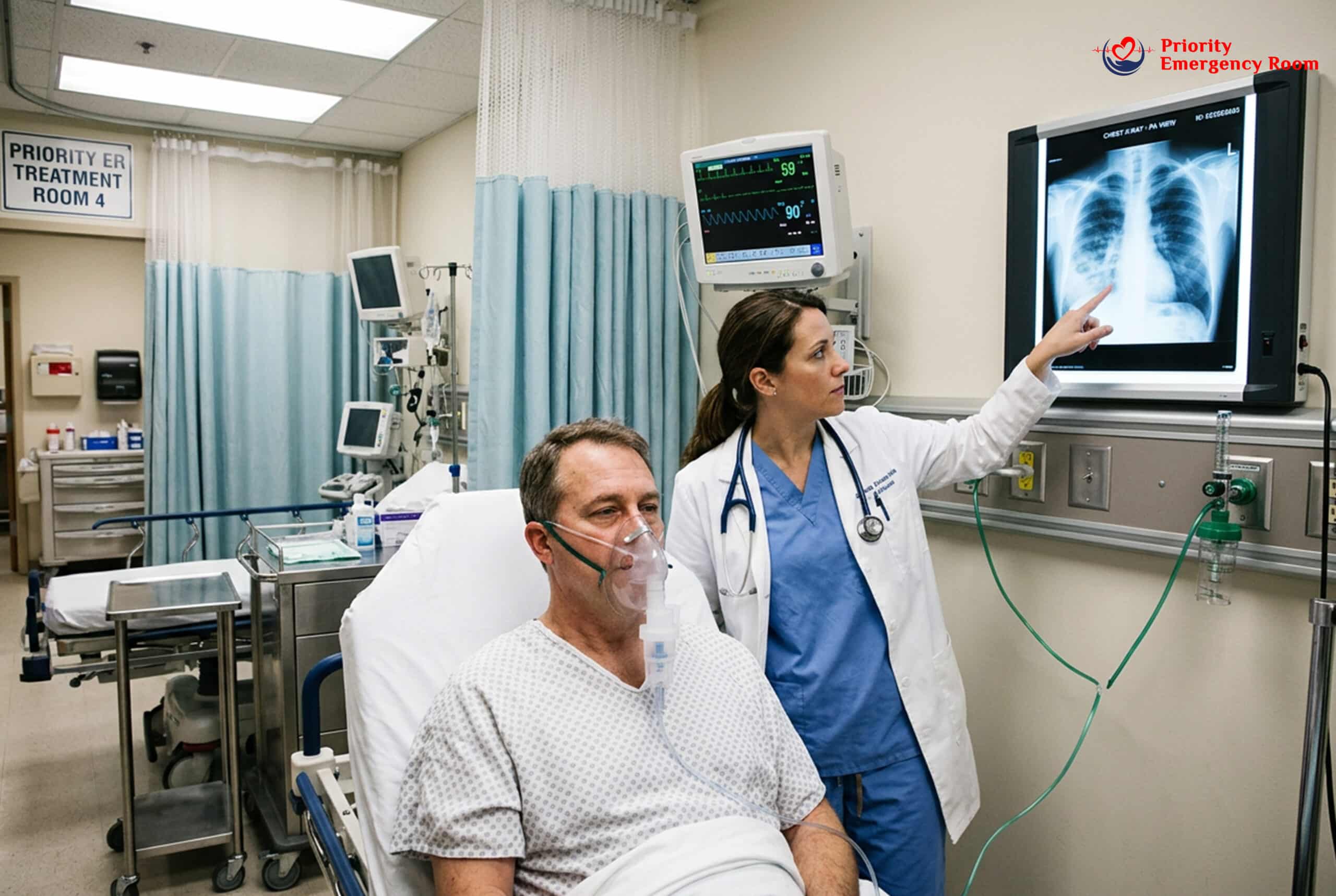
If you have any emergency signs, go to the ER. A chest X-ray can determine if bronchitis has progressed to pneumonia.
If you have COPD, asthma, heart disease, diabetes, a weakened immune system, or are over 65—go to the ER sooner rather than later if bronchitis symptoms are worsening. These conditions make you more vulnerable to serious complications like pneumonia and respiratory failure.
When Bronchitis Can Be Managed at Home
Most cases of acute bronchitis are viral and will improve with rest and supportive care. Here’s when home management is appropriate.
Bronchitis That May Not Need the ER
Breathing comfortably • Normal color • Mild to moderate symptoms • Stable or improving
The key factor is stable or improving symptoms. If bronchitis is getting worse despite home care—especially breathing difficulty—you need the ER.
When Bronchitis Is an Emergency
These bronchitis symptoms require immediate emergency care. Don’t wait. Our pneumonia emergency team says these need urgent attention:
Emergency
Severe Breathing Difficulty
Gasping for air, can’t catch your breath, using neck and chest muscles to breathe, or can only speak a few words between breaths. This requires immediate ER care.

Emergency
Blue Lips or Fingernails
Blue, gray, or pale discoloration of lips, tongue, or fingernails indicates dangerously low oxygen levels. Go to the ER immediately or call 911.
Emergency
High Fever (103°F+)
High fever with bronchitis can indicate bacterial infection, pneumonia, or other serious complications requiring chest X-ray and possibly antibiotics.
Emergency
Coughing Up Blood
Blood in your mucus or coughing up frank blood requires immediate evaluation. This can indicate pneumonia, pulmonary embolism, or other serious conditions.
When in Doubt, Get Checked
If you’re wondering whether your bronchitis is serious enough for the ER, it’s probably worth getting evaluated. A chest X-ray can quickly determine if you have pneumonia, and treatment is much more effective when started early.
Built for Respiratory Emergencies
When bronchitis becomes a breathing emergency, you need fast care. Here’s what makes Priority ER different:
The Difference at 2 AM
Hospital ER
3+ hours
Average wait in Texas
Priority ER
Minutes
Straight to a room
Chest X-Ray
On-site, results in minutes
Nebulizers
Breathing treatments
Oxygen
If levels are low
Same capabilities as a hospital ER.
Without the chaos.
What to Expect When You Arrive
Here’s how a Priority ER bronchitis visit unfolds:
Your Priority ER Visit
From arrival to breathing easier
0-2 minutes
2-5 minutes
5-10 minutes
10-45 minutes
45-90 minutes
Immediate Triage (0-2 min)
Breathing problems are prioritized. You’re seen immediately.
Oxygen Check (2-5 min)
Oxygen levels checked, supplemental oxygen provided if needed.
Physician Exam (5-10 min)
Doctor listens to your lungs, assesses severity, orders tests.
X-Ray & Treatment (10-45 min)
Chest X-ray to check for pneumonia, nebulizer treatment, steroids if needed.
Breathing Better (45-90 min)
Once stable, discharged with prescriptions and follow-up instructions.
At Priority ER, treatment begins within minutes of arrival—not hours of waiting while struggling to breathe. Find a 24-hour emergency room near you.²
When Bronchitis Becomes a Breathing Emergency
Board-certified emergency physicians. Chest X-ray. Nebulizers. Oxygen. Zero wait time. Breathe easier, fast.
Priority ER Locations
All locations have chest X-ray, nebulizers, oxygen, and board-certified emergency physicians ready to treat respiratory emergencies.
🌵 Odessa (West Texas)
3800 E 42nd St, Suite 105
Odessa, TX 79762
Serving Odessa, Midland, Gardendale, Greenwood & the Permian Basin
🏛 Round Rock (Austin Area)
1700 Round Rock Ave
Round Rock, TX 78681
Serving Round Rock, Cedar Park, Pflugerville, Georgetown & North Austin
⭐ McKinney (North Dallas)
5000 Eldorado Pkwy
McKinney, TX 75072
Serving McKinney, Frisco, Allen, Prosper & Collin County
🏙 Pantego (Arlington)
1607 S Bowen Rd
Pantego, TX 76013
Serving Arlington, Pantego, Grand Prairie & Mid-Cities DFW
🌊 Rockwall (East Dallas)
2265 N Lakeshore Dr #100
Rockwall, TX 75087
Serving Rockwall, Heath, Rowlett, Fate & Lake Ray Hubbard area
The Bottom Line: When Is Bronchitis an Emergency?
Bronchitis becomes an emergency when you have severe breathing difficulty, blue lips or nails, high fever, coughing up blood, severe chest pain, or rapidly worsening symptoms. These can indicate pneumonia or respiratory failure requiring immediate treatment.
Priority ER has on-site chest X-ray, nebulizers, oxygen, and board-certified emergency physicians—everything you need for a bronchitis emergency, without the hospital ER wait. We also offer rapid infection panels for accurate diagnosis.
When bronchitis becomes a breathing emergency, come get help fast.
Medical References
- American College of Emergency Physicians. (2024). “Clinical Policy: Acute Respiratory Illness.” ACEP. Retrieved from https://www.acep.org/
- American Lung Association. (2024). “Acute Bronchitis.” Retrieved from https://www.lung.org/
- Centers for Disease Control and Prevention. (2024). “Chest Cold (Acute Bronchitis).” Retrieved from https://www.cdc.gov/
- American College of Chest Physicians. (2024). “Diagnosis and Management of Cough.” CHEST Guidelines. Retrieved from https://www.chestnet.org/
- Priority ER Internal Data. (2024). “Respiratory Emergency Statistics.” Quality Assurance Report.
- Mayo Clinic. (2024). “Bronchitis.” Retrieved from https://www.mayoclinic.org/
- Infectious Diseases Society of America. (2024). “Community-Acquired Pneumonia Guidelines.” Retrieved from https://www.idsociety.org/
- Healthcare Cost and Utilization Project. (2024). “ED Visits for Respiratory Illness.” Retrieved from https://hcup-us.ahrq.gov/
- Texas Department of State Health Services. (2024). “Emergency Department Statistics.” Retrieved from https://www.dshs.texas.gov/