





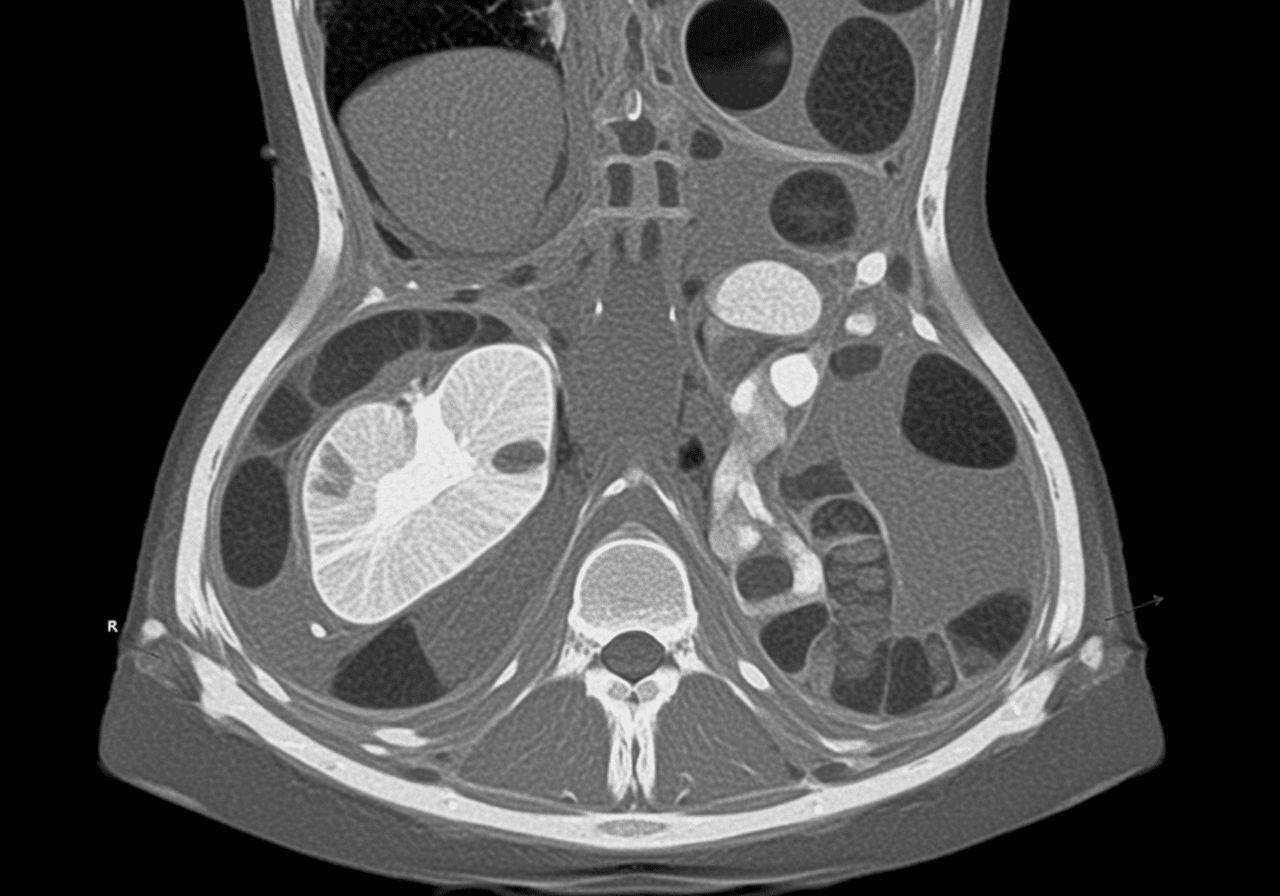
An abdominal CT for suspected appendicitis, perforation or internal bleeding is a fast, detailed scan that helps emergency physicians see inside your belly when severe abdominal pain, a hard or swollen abdomen, or an injury raises the concern of a serious problem. In many adults it is one of the most useful tests for finding an inflamed appendix, a hole (perforation) in the stomach or bowel, or blood collecting inside the abdomen. At Priority ER Care in Odessa, CT imaging is available on site 24/7, so the scan can be done during the same emergency visit when the physician decides it is needed.
If you think you are having a medical emergency, call 911. If you have severe belly pain after a car crash or fall, are vomiting blood, are passing large amounts of blood, feel faint, or someone is confused or hard to wake, call 911 instead of driving yourself.
Quick answer
- A CT scan of the abdomen and pelvis is a common emergency test when appendicitis, a perforated organ or internal bleeding is suspected in adults.
- The ER physician decides whether you need CT, ultrasound, X-ray or lab tests first, based on your symptoms, age, exam and pregnancy status.
- Severe, worsening or constant belly pain, especially with fever, vomiting or a rigid abdomen, should be checked in an emergency room, not waited out.
- Priority ER Care in Odessa has CT, ultrasound, X-ray and lab testing on site and is open 24/7 for walk-in emergency care.
- If surgery or hospital admission is needed, the team stabilizes you and arranges transfer to a hospital.
Why an abdominal CT matters in an emergency
Belly pain ranges from a stomach bug to conditions that need surgery within hours, and an exam and blood tests cannot always show what is happening deep inside the abdomen. A CT (computed tomography) scan uses X-rays and a computer to create cross-section pictures of the organs, blood vessels and bowel.
Suspected appendicitis
The appendix is a small pouch attached to the large intestine on the lower right side. When it becomes blocked and inflamed, the classic pattern is pain that starts around the belly button and moves to the lower right abdomen, often with loss of appetite, nausea, vomiting and a low fever. Older adults, pregnant women and young children may not have the classic pattern. A CT can show an enlarged, inflamed appendix and help the physician tell appendicitis apart from other causes such as kidney stones, ovarian problems or bowel infections.
Perforation (a hole in the stomach or bowel)
A perforation can happen when an ulcer, a severely inflamed appendix, diverticulitis or an injury causes a hole in the wall of the stomach or intestine. Leaking contents can cause a serious infection called peritonitis. Typical signs include sudden, severe pain, a belly that feels hard or board-like, fever and feeling very ill. CT is very good at spotting small amounts of free air or fluid that point to a perforation.
Internal bleeding
Bleeding inside the abdomen may follow a car crash, a fall, a sports injury or a blow to the belly. It can also happen without injury, such as from a ruptured ectopic pregnancy. Warning signs include belly pain, swelling, dizziness, a fast heartbeat, pale or clammy skin and fainting. In stable patients, CT can show where blood is collecting and which organ, such as the liver or spleen, may be injured. Unstable patients may need treatment and transfer before any scan.
How emergency physicians decide which imaging test you need
Not every belly ache needs CT. The physician weighs your symptoms, exam and risks before choosing a test:
- CT of the abdomen and pelvis: often the most informative test for adults with suspected appendicitis, perforation, abscess or injury. Sometimes contrast dye is given by IV or by mouth to make organs and vessels easier to see.
- Ultrasound: uses sound waves with no radiation. It is often a first choice for children, pregnant patients and gallbladder or pelvic concerns.
- X-ray: quick and useful for some questions, such as bowel blockage or free air, but it shows less detail than CT.
- Lab tests: blood counts, chemistry panels, urine tests and pregnancy tests help guide imaging choices and treatment.
Learn more about the scans available on site on our emergency diagnostic imaging page and our laboratory testing services page.
CT uses more radiation than a regular X-ray, so it is ordered when a clear answer matters. Tell staff if you might be pregnant, have kidney disease or have reacted to contrast dye before.
Symptoms and what to do next
Use this table as a general guide only; it does not replace a medical exam.
| Symptom or situation | What it may suggest | What to do |
|---|---|---|
| Pain that moves to the lower right belly, with nausea or fever | Possible appendicitis | Go to an emergency room now; do not eat or drink until evaluated |
| Sudden, severe pain with a hard, rigid belly | Possible perforation or peritonitis | Go to the ER immediately; call 911 if very ill or faint |
| Belly pain after a crash, fall or blow to the abdomen | Possible internal injury or bleeding | Call 911 for major trauma; otherwise go to the ER right away |
| Dizziness, fainting, fast heartbeat or pale, clammy skin with belly pain | Possible internal bleeding or shock | Call 911 |
| Belly pain and a positive pregnancy test or missed period | Possible ectopic pregnancy | Go to the ER now; call 911 if faint or bleeding heavily |
| Mild cramping that comes and goes, no fever, eating and drinking normally | Often a minor stomach or bowel issue | Call your doctor; go to the ER if it worsens or new red flags appear |
ER vs urgent care for belly pain: urgent care clinics usually do not have CT scanners or emergency physicians on site and may send patients with serious abdominal pain to an emergency room anyway. If you suspect appendicitis, a perforation or internal bleeding, going directly to an ER can save time.
Go to the ER right away if…
- Your belly pain is severe, constant or getting worse over several hours.
- Your abdomen feels hard, rigid or very tender to touch.
- You have belly pain with fever, repeated vomiting or you cannot keep fluids down.
- You were in a car crash, fell or were hit in the belly, even if you felt fine at first.
- You are pregnant or could be pregnant and have belly or pelvic pain or bleeding.
- A child has belly pain with fever, refuses to walk, or is unusually sleepy or irritable.
Call 911 for fainting, confusion, trouble breathing, heavy bleeding, signs of shock, or any major trauma. Paramedics can begin care on the way.
What to expect at Priority ER Care
You can walk in any time, day or night. A typical visit for serious abdominal pain looks like this:
- Triage: a nurse checks your vital signs and asks about your pain, when it started and your medical history. The sickest patients are seen first.
- Physician exam: an emergency physician examines your abdomen and decides which tests you need.
- Testing on site: blood and urine tests, pregnancy testing when appropriate, and imaging such as CT, ultrasound or X-ray.
- Treatment: IV fluids, IV medications for pain and nausea, and antibiotics when infection is suspected.
- Next steps: if you need surgery or admission, the team stabilizes you and arranges transfer to a hospital; otherwise you go home with clear follow-up instructions.
Priority ER Care Odessa: 3800 E 42nd St, Suite 105, Odessa, TX 79762 · (432) 552-8208 · open 24/7. We also have emergency rooms in North Texas: see our McKinney emergency room and Rockwall emergency room pages, or view all locations.
Cost and billing at a freestanding ER
Priority ER Care is a freestanding emergency room. Freestanding ERs charge rates comparable to a hospital emergency room and may charge a facility fee. The facility and its physicians may be out-of-network with your health plan, and physicians may bill separately from the facility. For details, visit our billing and insurance page or ask our staff during your visit.
Frequently asked questions
Can a CT scan tell if I have appendicitis?
In most adults, a CT scan of the abdomen and pelvis is one of the most reliable tests for appendicitis. It can show an enlarged or inflamed appendix and signs of rupture or abscess. The physician combines the scan with your exam and lab results to make the diagnosis. For children and pregnant patients, ultrasound is often tried first.
Do I need contrast dye for an abdominal CT?
Sometimes. Contrast given through an IV, and occasionally by mouth, helps organs, blood vessels and bowel stand out more clearly. Whether you need it depends on what the physician is looking for. Tell the staff about any kidney problems, diabetes or prior contrast reactions so they can choose the safest option for you.
Should I eat or drink before going to the ER with belly pain?
It is best to avoid eating or drinking until you are evaluated, because some abdominal conditions need surgery or procedures that require an empty stomach. Bring a list of your current medications.
What happens if the CT shows I need surgery?
Freestanding ERs do not perform surgery or admit patients overnight. If your scan shows appendicitis, a perforation or bleeding that needs a surgeon, the Priority ER Care team stabilizes you with IV fluids, medications and monitoring, and arranges transfer to a hospital that can provide surgical care.
This article is for general information and is not medical advice. If you think you have a medical emergency, call 911 or go to the nearest emergency room.
