

Searching “Freestanding ER Near Me”? Here’s What Every Parent Needs to Know
You know this feeling. That moment when you put your hand on your kid’s forehead and your stomach drops. The thermometer confirms what you already sensed: 103.4°F. Your spouse is already reaching for the phone, searching “freestanding ER near me.”
Stop. Before you load everyone into the car, you need to know something that could change everything about the next few hours.
Here’s what most parents don’t realize: A freestanding ER is a fully licensed emergency room with the same capabilities as a hospital ER—but without the chaos and wait times. Hospital ERs handle the same conditions but come with 3+ hour wait times. Freestanding ERs like Priority ER get you to a doctor in minutes. If your gut says something’s really wrong with your child, a freestanding ER is the smarter choice.
Freestanding ER vs. Hospital ER: What’s the Actual Difference?
This isn’t about what sign is on the building. It’s about what’s inside the building—and whether they can actually help your child quickly at 2 AM. When you’re searching for the closest ER near you, the wait time matters as much as the location.
Emergency physicians use something called the Pediatric Assessment Triangle to evaluate children in under 30 seconds. You can use the same approach at home.
A — Appearance: Is your child alert and responsive? Look for eye contact, normal crying with tears, and good muscle tone. Warning signs: limp or floppy body, won’t make eye contact, unusually quiet or inconsolable.
B — Breathing: Is breathing quiet and effortless? Can they speak in full sentences? Warning signs: visible rib movement with each breath, nasal flaring, grunting sounds, can only speak one or two words at a time.
C — Circulation: Is skin color normal? Are hands and feet warm? Warning signs: pale or gray skin, blue lips or fingertips, blotchy appearance, cold extremities.
If all three look normal, your child is likely stable—an urgent care visit or telemedicine may be appropriate. If any one of these looks abnormal, seek emergency care immediately.
When you search for emergency care, the closest hospital ER might still mean a 3-6 hour wait once you arrive. Freestanding ERs like Priority ER are truly open 24 hours a day, 365 days a year—including Christmas, Thanksgiving, and every other night when kids seem to get sick. With minutes-to-provider wait times, you get the same emergency care without the chaos.
When Urgent Care is Totally Fine
Not everything is an emergency. Urgent care centers exist for a reason, and they can handle plenty of common childhood issues without the full power of an ER. Understanding the difference between a clinic and urgent care can help you make the right choice. Save yourself time and money when the situation calls for it.
LOW ACUITY
Conditions Appropriate for Urgent Care / Clinic
Stable vital signs • Alert and responsive • No respiratory distress
The key word is mild. When symptoms are manageable and your child is alert, drinking fluids, and responsive—an urgent care center during daytime hours works fine. But when things escalate, when your instincts say this is different, that’s when you need emergency-level care at a freestanding ER.
When Your Child Needs the ER Right Now
Parents know. There’s a difference between “sick” and “something’s really wrong.” Trust that instinct. Here’s what our pediatric emergency team says warrants immediate ER care:
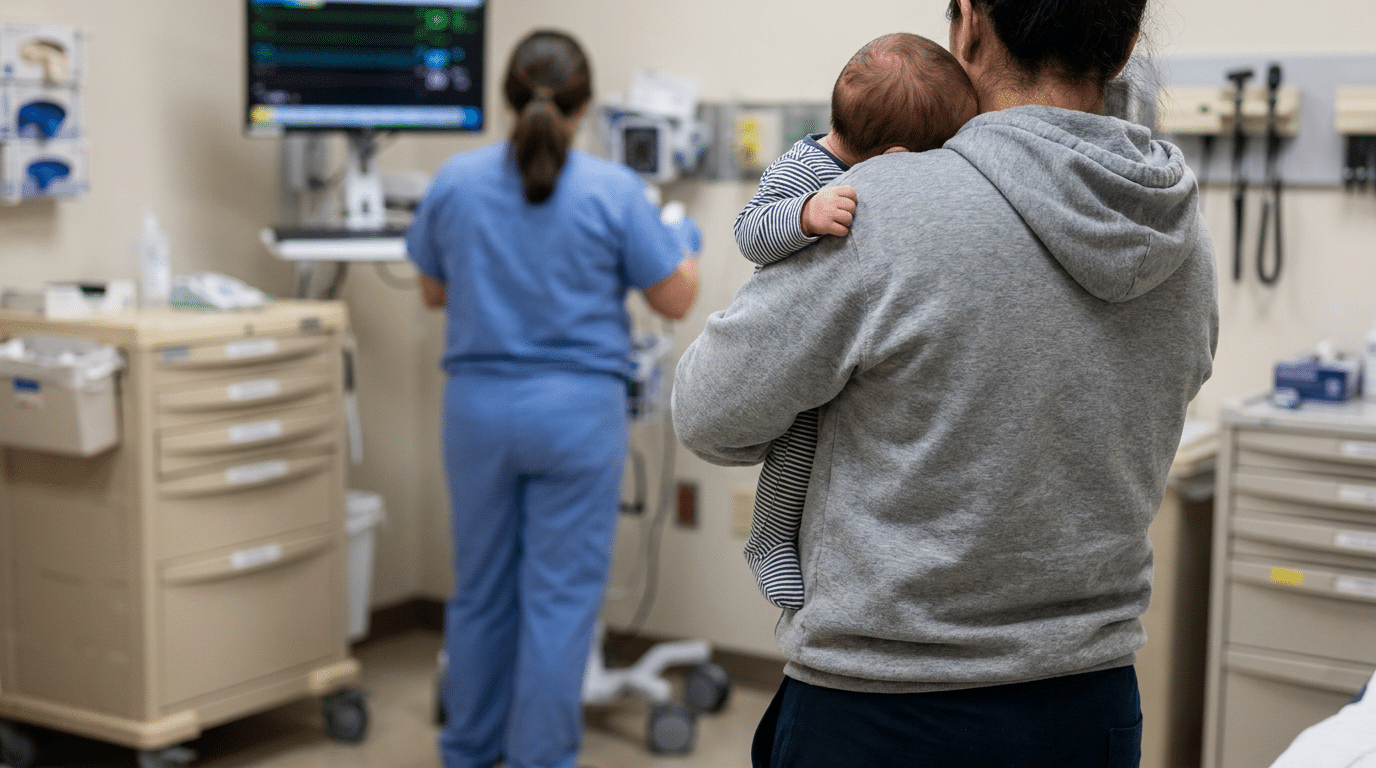
Emergency
High Fever (103°F+)
Especially dangerous in infants under 3 months. Seek ER care if fever comes with stiff neck, severe headache, or rash.
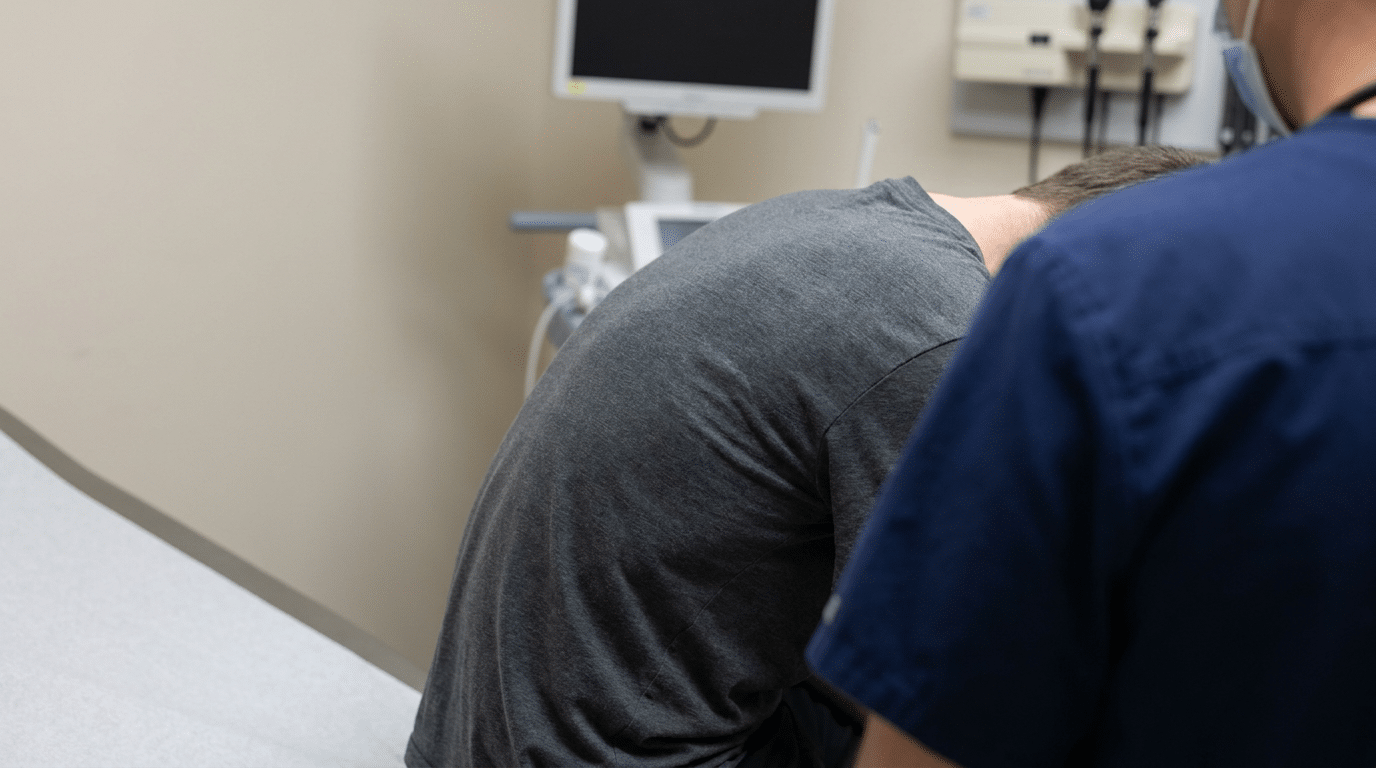
Emergency
Difficulty Breathing
Ribs showing with each breath, lips turning blue, grunting, or unable to speak in full sentences. Don’t wait.
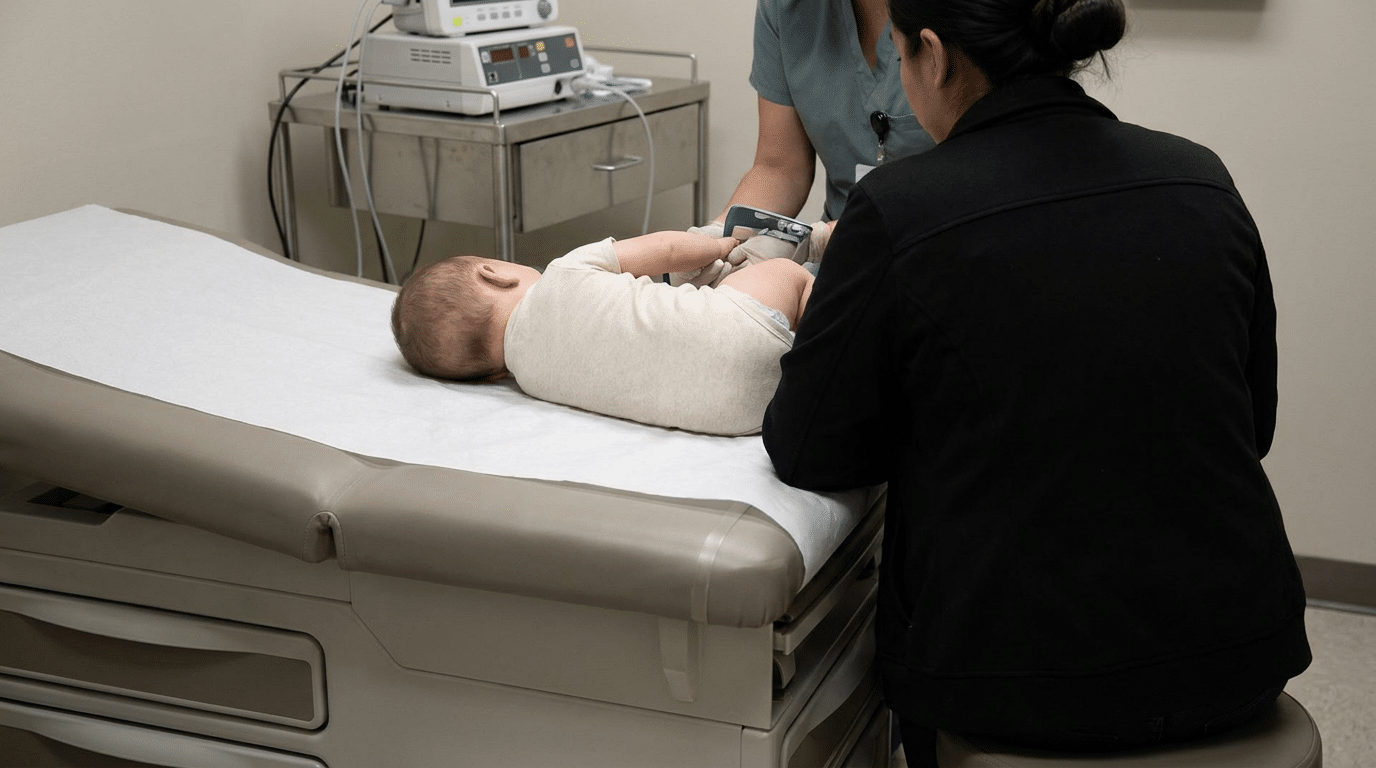
Emergency
Severe Dehydration
No wet diapers for 8+ hours, no tears when crying, sunken soft spot in infants, or very dry mouth and lips.
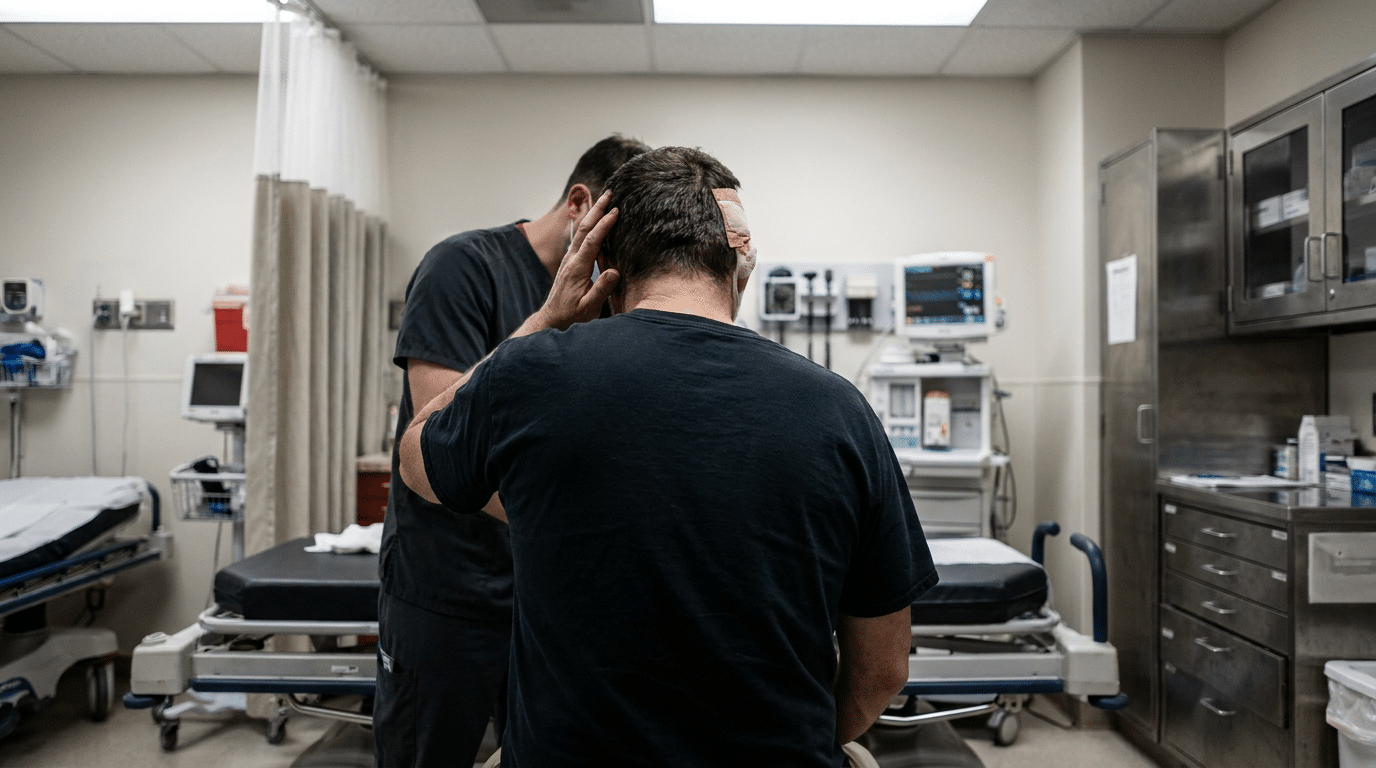
Emergency
Head Injuries
Especially with vomiting, confusion, unequal pupils, or any loss of consciousness after impact.
Other emergencies that require the ER include severe abdominal pain, severe allergic reactions, seizures (especially first-time or lasting more than 5 minutes), and broken bones with visible deformity. When you need a 24-hour ER near you, Priority ER’s freestanding locations are ready to help.
Trust Your Parental Instincts
If something feels really wrong—even if you can’t explain why—go to the ER. Parents know their children better than anyone. That gut feeling exists for a reason.
WHY PRIORITY ER
Built for Reliability When It Matters Most
When your child is sick at 2 AM, you need certainty—not “maybe” or “we’ll see.” Here’s what makes Priority ER different:
01
02
03
04
05
06
The Difference at 2 AM
Hospital ER
3+ hours
Average wait in Texas
Priority ER
Minutes
Straight to a room
CT Scans
On-site, results in minutes
Full Lab
No waiting for off-site results
Real ER
Board-certified ER physicians
Same capabilities as a hospital ER.
Without the chaos.
What to Expect When You Arrive
Knowing what happens next can help both you and your child feel calmer. Here’s how a Priority ER visit typically unfolds:
Your Priority ER Visit
From arrival to answers
0-2 minutes
2-5 minutes
5-10 minutes
10-30 minutes
30-60 minutes
Immediate Greeting (0-2 min)
You’re greeted the moment you walk in. No clipboard, no waiting for someone to notice you.
Private Room (2-5 min)
Your child goes straight to a private treatment room. Family stays together.
Physician Exam (5-10 min)
A board-certified ER doctor examines your child and explains what’s next.
Testing (10-30 min)
Any needed labs, imaging, or tests—all done on-site with fast results.
Answers & Treatment (30-60 min)
Diagnosis explained, treatment provided, discharge instructions given. You leave with answers.
Compare that to a typical hospital ER: wait for triage, wait for a room, wait for a doctor, wait for lab results, wait for imaging results… You could spend 4-6 hours for the same care that takes under an hour at Priority ER.²
Pediatric-Ready 24/7
When You Need a Freestanding ER Near You
Board-certified emergency physicians. Pediatric expertise. CT scans and full lab on-site. Zero wait time. This is what real pediatric emergency care looks like.
Priority ER Locations
All locations are equipped with pediatric emergency capabilities and staffed by board-certified emergency physicians.
🌵 Odessa (West Texas)
3800 E 42nd St, Suite 105
Odessa, TX 79762
Serving Odessa, Midland, Gardendale, Greenwood & the Permian Basin
🏛 Round Rock (Austin Area)
1700 Round Rock Ave
Round Rock, TX 78681
Serving Round Rock, Cedar Park, Pflugerville, Georgetown & North Austin
⭐ McKinney (North Dallas)
5000 Eldorado Pkwy
McKinney, TX 75072
Serving McKinney, Frisco, Allen, Prosper & Collin County
🏙 Pantego (Arlington)
1607 S Bowen Rd
Pantego, TX 76013
Serving Arlington, Pantego, Grand Prairie & Mid-Cities DFW
🌊 Rockwall (East Dallas)
2265 N Lakeshore Dr #100
Rockwall, TX 75087
Serving Rockwall, Heath, Rowlett, Fate & Lake Ray Hubbard area
The Bottom Line for Parents
When you’re searching “freestanding ER near me” at 2 AM with a sick child, you’ve already made the smart choice—you know that hospital ERs come with chaos and 3-6 hour waits. Now you just need to know which freestanding ER to choose.
Know the difference: not all emergency rooms operate the same way. Hospital ERs handle the same conditions but come with massive wait times. Priority ER, as a freestanding ER, gives you full emergency room capabilities—pediatric expertise, advanced imaging, on-site labs—without the chaos and wait times of a hospital.
When your instincts say something’s really wrong with your child, trust them. And come to a place that can actually help—fast.
Medical References
- American College of Emergency Physicians. (2024). “Freestanding Emergency Department Standards and Outcomes.” ACEP Clinical Practice Guidelines. Retrieved from https://www.acep.org/
- Texas Department of State Health Services. (2024). “Freestanding Emergency Department Utilization in Texas.” Regional Health Report. Retrieved from https://www.dshs.texas.gov/
- Priority ER Internal Data. (2024). “Annual Patient Outcomes and Emergency Care Statistics.” Quality Assurance Report.
- American College of Radiology. (2024). “Digital Radiography Standards for Emergency Departments.” ACR Technical Standards. Retrieved from https://www.acr.org/
- American College of Emergency Physicians. (2024). “Pediatric Emergency Care Guidelines.” ACEP Clinical Policies. Retrieved from https://www.acep.org/
- National Emergency Medicine Association. (2024). “Freestanding Emergency Departments: Access and Outcomes.” Journal of Emergency Medicine, 48(9), 542-549.
- Mayo Clinic. (2024). “When to Choose a Freestanding ER vs. Hospital ER.” Mayo Clinic Proceedings. Retrieved from https://www.mayoclinic.org/
- Healthcare Cost and Utilization Project. (2024). “Emergency Department Visits for Pediatric Conditions.” HCUP Statistical Brief #182. Retrieved from https://hcup-us.ahrq.gov/
- Radiological Society of North America. (2024). “Digital Radiography Technical Standards.” RSNA Guidelines. Retrieved from https://www.rsna.org/